WE PROVIDE SUPPORT FOR INTERNSHIPS, STARTING A JOB IN A COMPANY, OR SETTING UP YOUR OWN BUSINESS
Course Content
Changing lives through science and technology
Imagine being part of a revolution that could improve the lives of millions of people. Detecting diseases early, tailoring therapies to individual patients, developing new drugs – it all starts with data. In a world where biological processes are more complex than ever before, you need tools that go beyond human imagination. This is exactly where digital biomedicine and bioinformatics come in: they combine natural sciences with state-of-the-art information technology and open up completely new possibilities for the medicine of tomorrow.
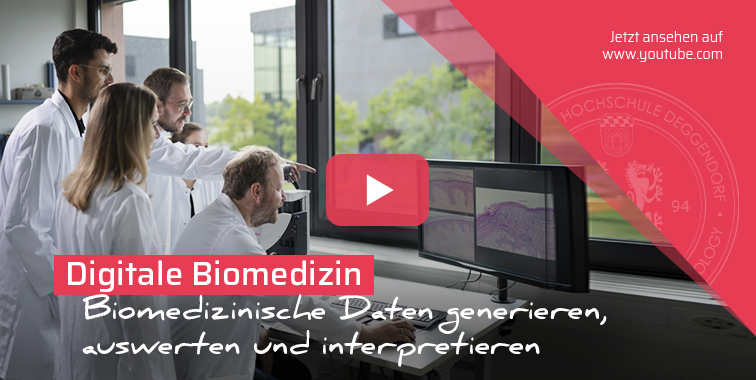
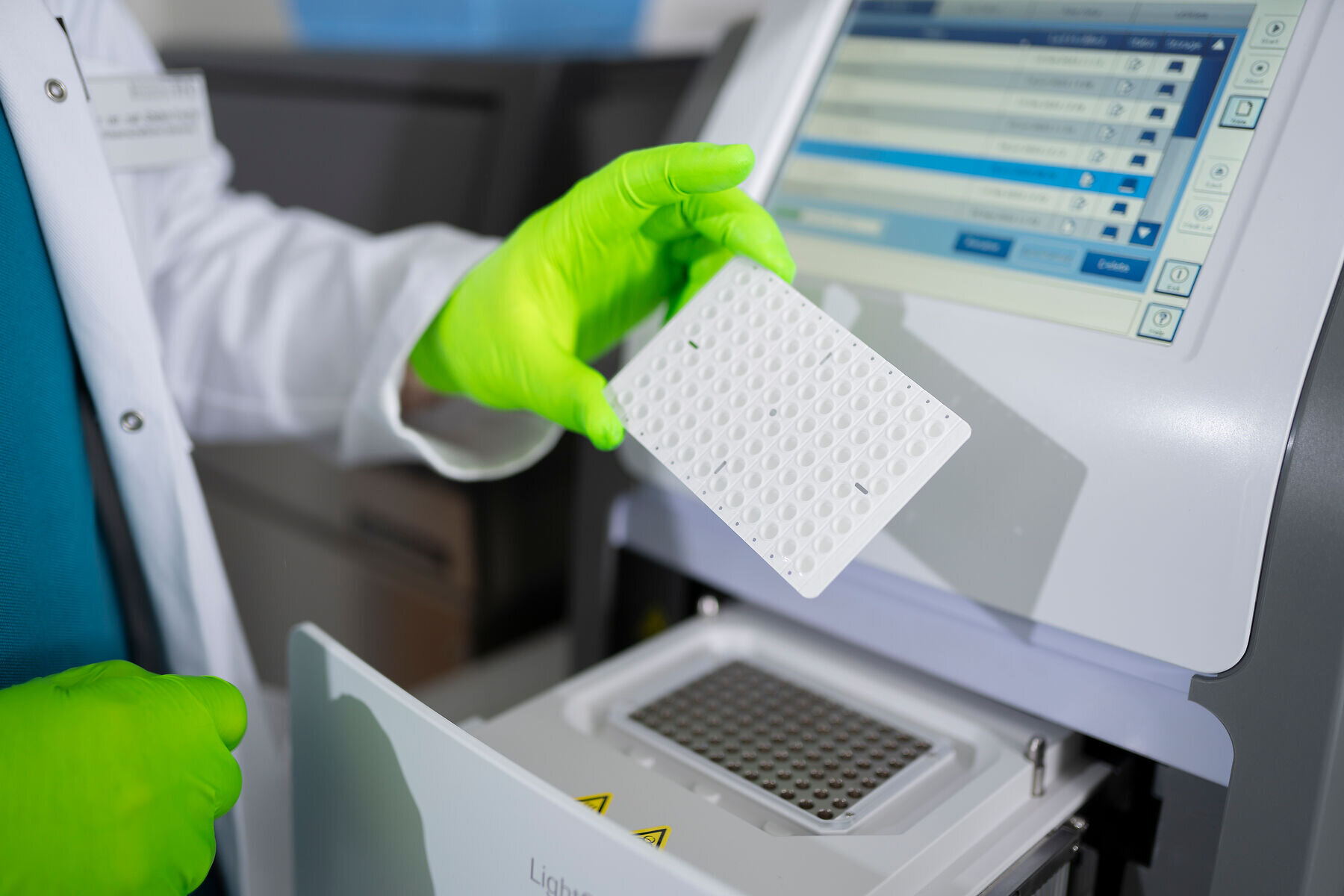
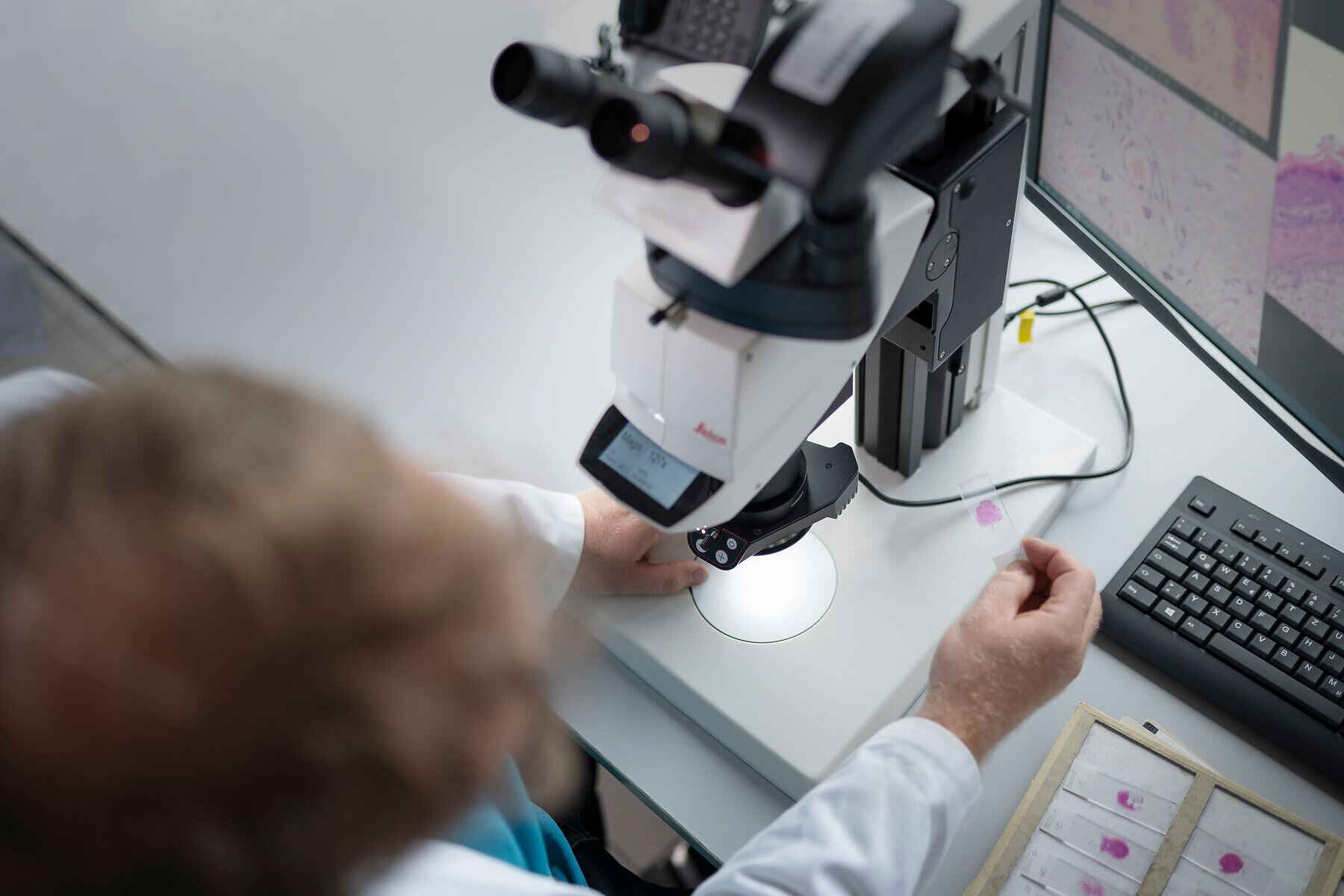
During your studies, you will learn how to analyse huge amounts of data from molecular and cell biology and decode it using algorithms and AI. You will reveal what was previously hidden: gene expression, protein structures, cell mechanisms. This knowledge is crucial for research into cancer, genetic diseases and infections – and for the development of personalised therapies that can save lives.
The content is as diverse as it is exciting: molecular biology, chemistry, biochemistry and physiology meet computer science, mathematics and statistics. You will learn to model biological data, work with big data and develop innovative solutions.
If you are curious about science, think in a networked way and enjoy using technology to shape the future of health, you will open up a career field full of opportunities – in research, the pharmaceutical industry or clinical application.
This is not just about studying. It is about your opportunity to rethink medicine and actively contribute to ensuring that people receive the best treatment more quickly.
Are you ready to help shape the future?
details & Downloads
Study Digital Biomedicine as a dual-study program
Theory Meets Practice
Do you want to gain valuable practical experience, contribute to exciting IT projects, and even earn a salary while studying? Then the dual study program in Applied Computer Science / Infotronics at DIT is the perfect choice for you.
This dual study program combines the best of both worlds: solid theoretical knowledge at the university and valuable practical experience at a company. You can choose between two models:
- The combined study program (university studies with integrated vocational training)
- or a study program with integrated practical experience (intensive practical phases during semester breaks)
Important: For the dual study program, you must apply to both the company and the DIT.
DIT has been collaborating with numerous companies for many years—find out more about our cooperation partners here. You can also find potential dual study placements in the hochschule dual database.
Do you already have a specific company in mind, or would you like to submit a speculative application to a company that doesn't yet partner with us? Feel free to pass on our contact details so we can clarify all requirements (e.g., partnership agreement, internship semester guidelines) with the company.
Do you need general support regarding dual study programs? Feel free to get in touch with us: Contact Career Service
Curious about a dual study program?
Find out which model suits you, how to apply, and how we support you along the way—from searching for a company to starting your studies:


STUDENTS ON THE DIGITAL BIOMEDICINE COURSE
Course Content
career prospects
Bioinformaticians are sought everywhere where biological and medical data are generated. As a rule, there is a specific problem or question that you have to answer by analysing the data. You then develop computer-based applications, i.e. programmes, algorithms or scripts.
In this way you contribute to
- Research in the processes in the human body,
- The development of new medicines,
- Identifying disease-causing "biomarkers" (prognostics or diagnostics),
- The simulation of biological phenomena
- Or evolutionary research.
As a rule, you don't need more than a computer for this. Quite often you work as part of a scientific group of medical doctors, natural scientists and other computer scientists in the aforementioned fields. This can be in hospitals, in the pharmaceutical industry, in laboratories or even in the cosmetics industry. The study of biological data is also relevant for research in the plant and animal world.
As a bioinfomatics technician you will help
- Doctors find the right therapy,
- To offer patients the most effective form of therapy as quickly as possible,
- To communicate and to further research understanding of molecular biology and biomedical issues,
- Develop diagnostic tools in the field of molecular pathology,
- Digitalisation in health care, and
- Drug development.
Jobs typical for bioinformaticians:
- In companies in the pharmaceutical or chemical industry
- Software and database providers for scientific and biomedical applications
- At IT service providers and
- In research and development.